This post contains affiliate links. If you buy through one, we may earn a small commission at no extra cost to you. See our Affiliate Disclosure for details.
The Bottom Line
For most hard-water homes, a mid-range single-tank salt-based softener sized to your household’s daily usage is the right call — skip salt-free “conditioners” if you actually want soft water, not just less scale.
Finding the best water softener for your home comes down to matching the right size and type to your water hardness — not just picking the top-rated brand. If your glassware comes out spotted, your skin feels dry after a shower, or your kettle is crusted white inside, you’re dealing with hard water, and a water softener is the most direct fix. Here’s how to figure out which type and size actually fits your home, and what the leading options get right and wrong.
How to Choose the Right Water Softener
Before comparing specific models, three numbers matter more than any brand name:
- Water hardness (grains per gallon): most municipal water reports list this, or a cheap home test strip will tell you. This determines the grain capacity you need.
- Household size / daily water usage: more people means more water passing through the system between regenerations.
- Salt-based vs. salt-free: traditional ion-exchange softeners physically remove hardness minerals and need regular salt refills; salt-free “conditioners” alter mineral structure to prevent scale but don’t technically soften water the same way. If you want true softening, salt-based is still the proven technology.
As a rough sizing rule: multiply your household’s daily water usage (roughly 75-100 gallons per person) by your water hardness in grains per gallon, then look for a system with weekly softening capacity comfortably above that number to avoid regenerating too frequently.
Top Water Softener Picks
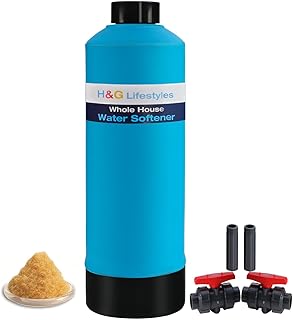
Best Overall: NSF-Certified 24,000 Grain Softener
True ion-exchange softener rated for well and city water. 700,000 gallon capacity. ~$279.99 · 4.2★ (178 ratings)
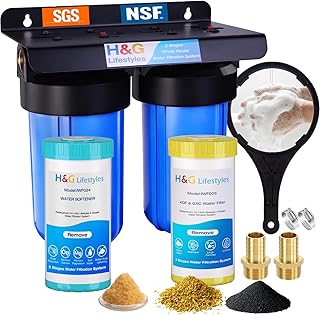
Best Budget: 2-Stage Softener & Filter
Cation ion exchange softening at an entry-level price. ~$139.99 · 3.9★ (77 ratings)
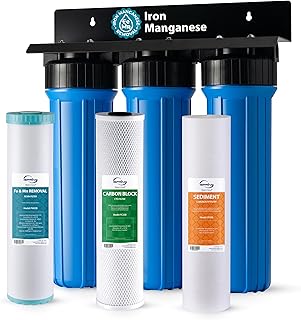
Best for Well Water: iSpring Iron & Manganese Filter
Purpose-built for iron, manganese, chlorine, and sediment. 4.6★ (1,300+ ratings). Check current price.
Salt-Based vs. Salt-Free: Which Do You Actually Need?
If you’re on a sodium-restricted diet or septic system and worried about salt-based softeners, it’s worth reading our full breakdown of salt-free water softener alternatives before deciding — they solve a related but different problem than traditional softening.
Frequently Asked Questions
How much does a water softener cost?
Whole-house systems typically range from $400 for basic units to $2,000+ for high-efficiency, smart-metered models, plus installation if you’re not doing it yourself. See our full water softener cost breakdown for a room-by-room estimate.
How long do water softeners last?
A well-maintained water softener typically lasts 10 to 15 years, though the resin bed and control valve are the parts most likely to need attention first. We cover the specifics in how long water softeners last.
Is a water softener the same as a water filter?
No — a softener removes hardness minerals (calcium and magnesium); a filter targets sediment, chlorine, or other contaminants. Many homes benefit from both. See water softener vs. water filter for the full comparison.