This post contains affiliate links. See our Affiliate Disclosure for details.
The Bottom Line
The best reverse osmosis system removes the widest range of contaminants of any home filtration option — including fluoride, PFAS, and lead — but it’s built for a single tap, wastes some water in the process, and needs periodic filter and membrane changes.
If you want the most thorough drinking water purification available for home use, a reverse osmosis (RO) system is it. Here’s how it works and what actually matters when choosing one.
How Reverse Osmosis Works
RO systems push water through a semi-permeable membrane fine enough to block dissolved solids, heavy metals, and many chemical contaminants that carbon filters alone can’t catch. Most systems pair this membrane with pre-filters (sediment, carbon) to protect it and a post-filter to polish the taste. The result is water that’s about as pure as filtration gets at the home level.
The Tradeoffs
- Wastewater: older RO systems reject several gallons of water for every gallon produced; newer high-efficiency models have improved this significantly, but it’s still worth checking the ratio.
- Slower output: most RO systems fill a small storage tank rather than producing water instantly, so very high-demand households should check flow rate and tank size.
- Removes minerals along with contaminants: RO doesn’t distinguish between “bad” and beneficial minerals. Many systems add a remineralization filter afterward specifically to address this — worth checking if that matters to you.
Not sure if RO is the right category for you versus a simpler filter? See our reverse osmosis vs. water filter comparison.
What to Check Before Buying
- Number of filtration stages and what each targets
- Wastewater ratio (lower is more water-efficient)
- Whether it includes remineralization
- Tankless vs. tank-based (tankless units are more compact but may have different flow characteristics)
- NSF/ANSI 58 certification specifically, which covers RO systems
Top Picks
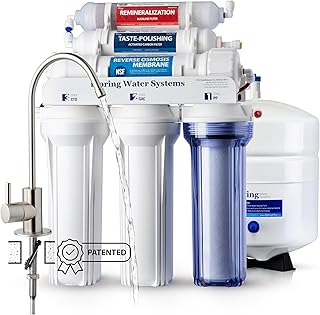
Best Overall: iSpring RCC7AK
6-stage with alkaline remineralization, NSF/ANSI 58 certified, reduces 1,000+ contaminants. ~$234.99 · 4.6★ (15,000+ ratings)
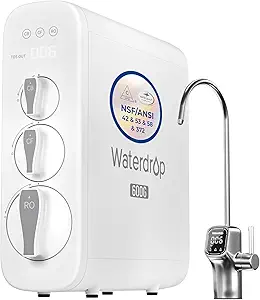
Best Tankless/Compact: Waterdrop G3P600
8-stage tankless design, NSF/ANSI 42, 53, 58 & 372 certified, smart LED faucet. 4.5★ (3,900+ ratings)
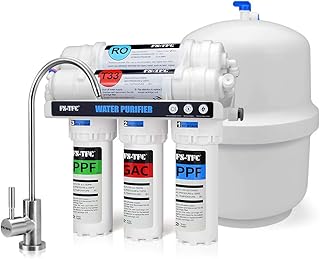
Best Budget: 5-Stage RO System
NSF certified, reduces 99.999% impurities, includes extra filters. ~$139.99 · 4.2★ (1,700+ ratings)
Frequently Asked Questions
Does RO remove fluoride and PFAS?
Yes — RO is one of the few home filtration methods that reliably reduces both. See our contaminant guides for more on specific contaminants.
Can I install this myself?
Many homeowners do, though RO systems are more involved than a standard under-sink filter due to the drain line connection. See our installation guide for the general process, and consider a plumber if you’re not comfortable with the drain tie-in.